Driss and Ismael’s relationship
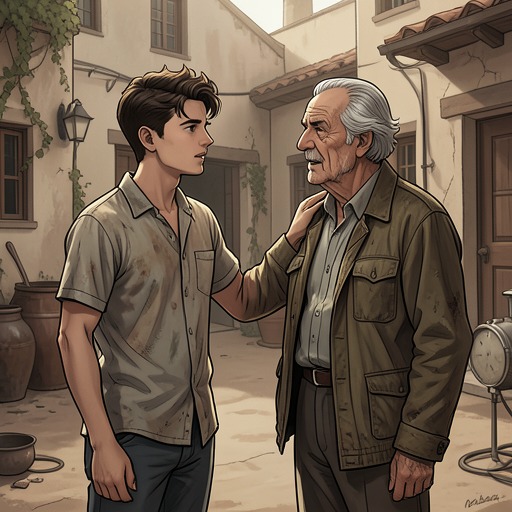
The ForgivenDriss and Ismael’s relationship takes shape around shared hardship and a shared wish to leave, but it is not an equal friendship. Ismael sees Driss as a friend; Driss treats closeness as something that can be used to secure a partner. Their conversations by a road and later beside a fire in the fossil quarry show the older boy turning stories, brotherly familiarity, and a common dream of the city into influence over the younger one.
Unequal Companions
Ismael addresses Driss as a brother and appeals to friendship when he challenges Driss’s account of his time with the Bloodworths. Driss rejects that understanding: in his view, people have no friends while trying to rise, and his place in the household had been that of a house slave. His question about what the experience had been for therefore cuts against Ismael’s more generous interpretation of the relationship. Driss’s answer also reveals how he measures ties: kindness does not necessarily create loyalty, especially when he believes the other party benefited from his labor.
The exchange is complicated by Driss’s explanation that the Bloodworths were lonely. Ismael’s reminder that they had been Driss’s friends meets neither a simple acceptance nor a denial of their kindness; instead, Driss shifts attention to the loneliness that, in his account, shaped their connection. The contrast leaves Ismael trying to name a bond that Driss assesses in terms of power and circumstance. Their difference is not merely over what to call the Bloodworths. It anticipates the uncertainty in Driss’s own bond with Ismael: the same warmth that Ismael takes as evidence of friendship can also serve Driss’s purposes.
Stories and Influence
Driss’s account of reaching Paris becomes a means of changing how Ismael sees him. After telling the story, Driss is pleased by its effect and believes Ismael accepts it. The younger boy returns to the fire impressed by Driss’s coldness and resourcefulness. Driss senses the shift: Ismael now admires him more, with wonder mixed with fear. That response is precisely what Driss wanted. The episode presents storytelling not only as recollection but as a way to shape the balance between them.
The story’s destination matters to both boys. Paris is the place they want to reach, and Driss’s tale makes that imagined escape seem more immediate. While they sit by the fire, they share market figs from a waxed paper bag brought from Erfoud and speak in the language of necessity. Ismael invokes his father’s belief that the world is cruel; Driss agrees. Their agreement briefly makes them sound like companions united by experience, but Driss’s private satisfaction in having increased Ismael’s admiration complicates the apparent solidarity. He offers Ismael half a fig as he continues talking, a small gesture of sharing within a conversation whose larger purpose is to win the younger boy’s compliance.
A Partnership Recruited
Driss’s practical objective becomes clearer when he says he has been thinking of a way for them to make money and then leave for the city. Ismael readily confirms that this is what he wants. Driss recognizes their common ambition and calls Ismael ambitious like himself, turning agreement about escape into a basis for cooperation. The plan remains unspecified in these scenes; what is explicit is that Driss wants Ismael involved and understands that a shared destination can make the proposal appealing.
He also makes clear that cooperation will require a change in Ismael’s conduct. Driss says the boy has been too sentimental and will need to become a warrior who does not think too much. Ismael insists he is not sentimental, with annoyance in his voice, and says he can do what is asked, though he cannot know for certain. Driss soothes him and postpones the explanation until after they have finished smoking. The delay preserves Driss’s control of information: Ismael agrees to the demanded attitude before learning what the job entails.
Friendship and Transaction
Elsewhere, Driss sits by the road after extinguishing his joint, apparently waiting for a small miracle. The road is also where his dope arrives and where he receives payments for black-market fossils. This detail places their later talk about earning money and leaving within Driss’s existing dependence on informal exchanges and precarious income. The evidence does not disclose the plan he has in mind, but it shows him recruiting Ismael from a position of experience and withholding its particulars while preparing the boy to participate.
The relationship therefore holds two meanings at once. Ismael offers the language of friendship and responds to Driss’s stories with admiration; Driss offers companionship, food, and a shared ambition, yet consciously uses these things to make Ismael more pliable. Their brotherly manner is genuine as part of their exchange, but it does not erase the imbalance between the older boy who directs the conversation and the younger one being drawn into an undisclosed scheme. The bond is a point of connection, and also the means by which Driss seeks to turn connection into partnership.